How to Choose Upholstery Fabric That Will Actually Last
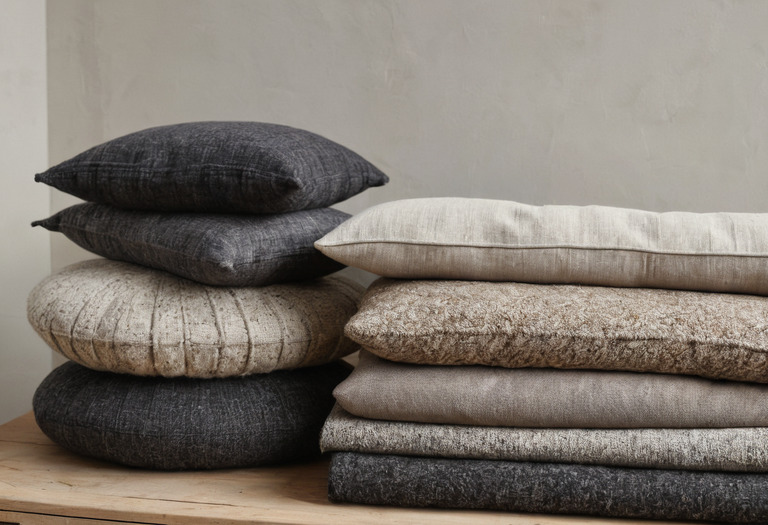
A high rub count does not guarantee a durable sofa. A sound upholstery specification also checks the test method, weave, fiber blend, pilling grade, lightfastness and permitted cleaning process.
A fabric sample can feel substantial and still fail early at a seam, pill across the seat or bleach beside a window. Upholstery selection therefore needs more than touch and color. The useful evidence sits in the technical sheet, provided that the designer reads each result in context.
Fabric also affects acoustics, reflected light and perceived warmth. The wider relationship between weave and a room is covered in our note on how texture changes light, sound and touch. Durability remains a separate question with measurable parts.
What does a rub count actually measure?
A rub count records how long a fabric specimen withstands controlled abrasion before reaching a defined endpoint. The result describes one laboratory test, not a predicted number of years in a home. Martindale and Wyzenbeek use different motions and abrasives, so their reported figures are not interchangeable.
| Method | Reported unit | Test action | What must accompany the result |
|---|---|---|---|
| Martindale, ISO 12947 method | Rubs or cycles to the stated endpoint | A specimen moves in a multidirectional Lissajous pattern against a specified abradant under a stated pressure | Test method, endpoint, pressure and specimen condition |
| Wyzenbeek, ASTM D4157 method | Double rubs to the stated endpoint | A specimen moves backward and forward over an oscillating cylinder against a specified abradant | Abradant type, test method and endpoint |
One Wyzenbeek double rub represents one backward-and-forward movement. One Martindale result comes from a different movement and contact pattern. No evidence supports a dependable equation between the two systems.
A laboratory may stop a test after yarn breaks, visible wear or another endpoint required by the chosen method. Two numbers can therefore look comparable while describing different failure criteria. A purchase order should name the method rather than stating only "30,000 rubs."
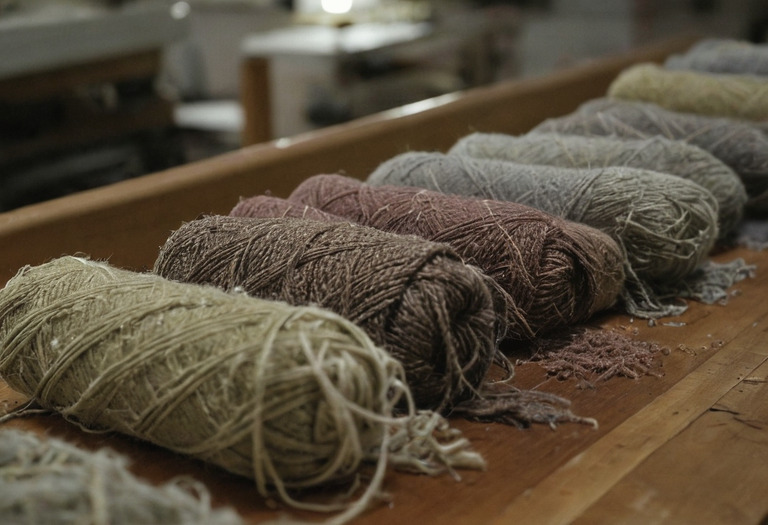
How many rubs does a family sofa need?
A daily-use family sofa benefits from a moderate safety margin rather than the largest available number. No international rule defines one residential pass mark. The ranges below are studio briefing filters for Martindale-tested fabrics, not legal standards, warranties or substitutes for the manufacturer's intended-use classification.
- An occasional bedroom chair can begin around 10,000 to 15,000 Martindale rubs when use is genuinely light.
- A daily-use adult sofa can begin around 20,000 to 30,000 Martindale rubs.
- A family sofa exposed to children, frequent guests or pets can begin around 30,000 to 50,000 Martindale rubs.
- A value above 50,000 Martindale rubs may be useful for unusually intensive residential use, but the larger figure does not correct weak seams, snagging yarns or poor cleaning compatibility.
Equivalent-looking Wyzenbeek numbers should not be substituted into those Martindale ranges. A designer comparing Wyzenbeek fabrics should keep the method constant and ask the supplier to confirm suitability for heavy residential seating.
Abrasion resistance tells the designer how a specimen survived rubbing. Abrasion resistance does not tell the homeowner how the complete sofa will survive children, sunlight, spills, claws and badly placed seams.
Furniture construction still matters after the textile passes. Seat-edge piping, tight corners and loose cushion fronts receive concentrated wear. Removable covers can help only when the maker designed the seams, closures and shrinkage allowance for removal. Our guide to comparing furniture makers and quotations explains why an upholstery allowance and a finished furniture price are not equivalent.
How does fiber content change performance?
Fiber content influences moisture absorption, abrasion, wrinkling, static and stain behavior, but the label cannot predict performance by itself. Yarn twist, staple length, weave density, pile construction, backing and finish can matter as much as the percentage composition. Designers should assess the tested finished cloth rather than an isolated fiber stereotype.
Cotton absorbs moisture and can accept rich dyes, while untreated cotton can crease, soil and fade. Linen has a crisp hand and visible slubs, while pure linen upholstery often wrinkles and can abrade at sharp cushion edges. Wool is resilient and naturally recovers well, while short or loosely spun wool fibers may pill.
Polyester usually offers good abrasion resistance, dimensional stability and lower moisture absorption. Polyester can retain oily marks, and textured polyester is not automatically snag-resistant. Nylon has strong abrasion performance but appears more often as a reinforcing blend than as the visible character of residential cloth. Acrylic is common in outdoor textiles because suitable solution-dyed constructions can provide strong light and weather resistance.
Viscose can add softness and luster to chenille or velvet. Viscose pile can mark when wet and may develop pressure shading, so a supplier's care restriction deserves attention. A responsible material specification should also ask about recycled claims, chemical finishes and certification scope rather than treating "natural" as proof of lower impact.
Which fabrics pill, snag or fade fastest?
Loose, hairy yarns and low-twist staple fibers tend to pill sooner because friction draws fiber ends to the surface. Open boucles and long floats tend to snag more readily. Fading depends on dye chemistry, fiber, color and exposure, so no fiber category is always the fastest to fade.
The ISO 12945 pilling assessment system commonly reports appearance on a grade from 1, meaning severe surface change, to 5, meaning no visible change under the assessment conditions. A procurement sheet should record the method and test duration beside the grade. A bare "pilling 4" entry omits information needed for a fair comparison.
Dark, saturated colors can make fading more obvious, although pale cloth also changes. Direct sun and ultraviolet exposure accelerate color change, while heat can compound deterioration in some materials. The room plan should pair textile selection with window openness, curtain stack and fading control, especially beside large glazing.
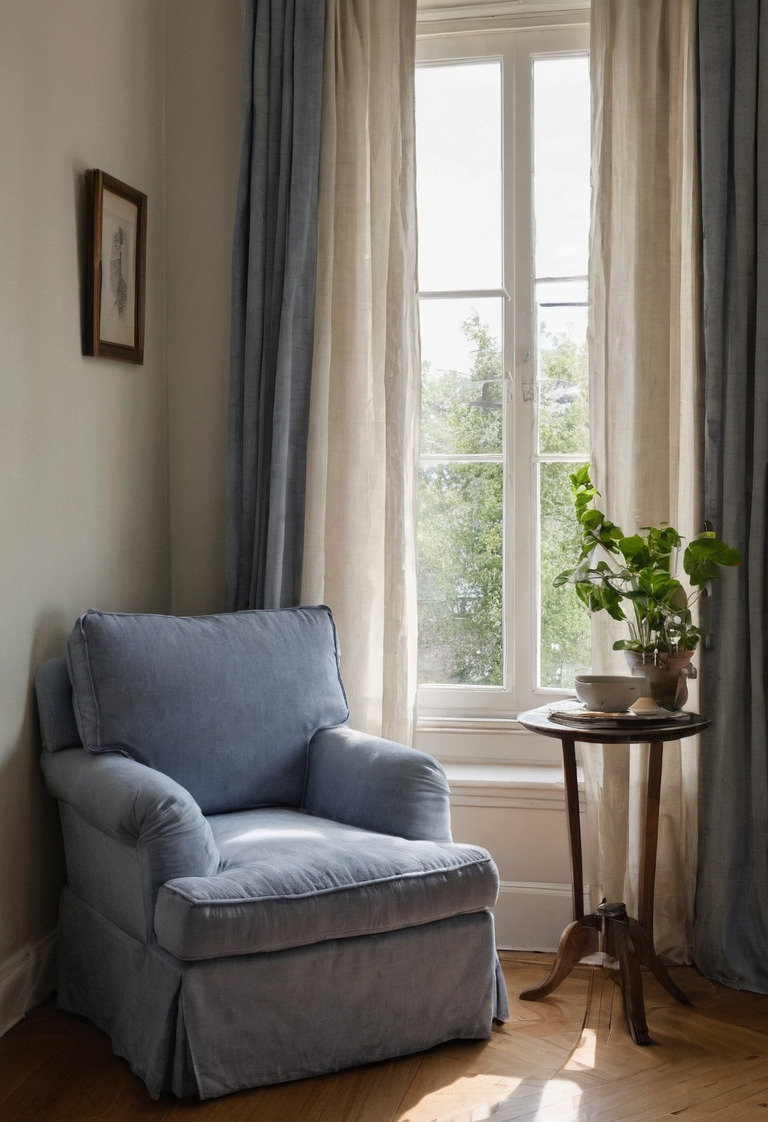
Abrasion, pilling and lightfastness results should refer to the exact colorway being ordered whenever possible. Different dyes and finishes can alter performance within one fabric collection.
Velvet deserves separate judgment because pile pressure can create shading that resembles damage. Boucle deserves a snag test if cats use the room. Outdoor seating needs a purpose-made specification covering moisture, mildew risk and light exposure; a high indoor rub count alone is inadequate. Our note on weatherproof materials for outdoor rooms addresses the rest of that assembly.
What do W, S, WS and X cleaning codes mean?
Cleaning letters are North American upholstery-care conventions rather than universal proof of stain resistance. W permits a suitable water-based upholstery cleaner, S calls for a suitable water-free solvent product, WS permits either category, and X limits routine care to vacuuming or light brushing unless professional advice says otherwise.
A W code does not mean that a cover is machine washable. A concealed zipper does not establish washability either. Water can distort a backing, leave rings, alter pile direction or shrink the cover enough to prevent refitting.
An S code also needs caution because consumer access to upholstery solvents varies by country, and unsuitable products can affect adhesives, foams or finishes. The supplier's current care sheet should control the cleaning decision. A cleaner should test any permitted product on a concealed area before treating a visible face.
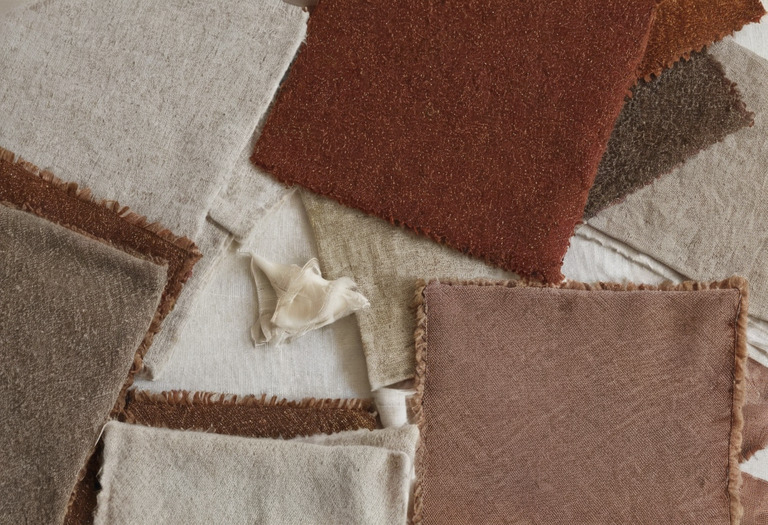
Families often benefit more from a cleanable medium-tone weave than from a very pale X-code textile with an exceptional rub count. Bedrooms may tolerate more delicate cloth because food, outdoor clothing and continuous sitting are less common. The wider room decision belongs alongside bedroom clearances, blackout and quiet rather than being made from a showroom sample alone.
What should the supplier confirm before the order is placed?
A reliable upholstery approval combines the performance report, physical sample and intended application. The designer should request current data for the exact construction and colorway, then attach the accepted reference to the purchase order. Verbal assurances such as "contract grade" or "family friendly" are too vague to resolve a later dispute.
Ask the supplier for:
- The abrasion method, result, abradant and endpoint.
- The pilling method, grade and test duration.
- The lightfastness result and the test method used.
- The cleaning code plus the full care instructions.
- The complete fiber percentages, backing and applied finish.
- The usable width, pattern repeat and roll direction.
- Confirmation that the fabric is approved for the intended furniture type.
- Any fire-performance documentation required by the project's country and occupancy.
- A cutting from the production batch when color matching is critical.
- Extra meterage advice for pattern placement, future repairs and dye-lot continuity.
A large sample should be viewed upright and horizontal because pile, texture and sheen change with orientation. The sample should also be checked under daylight and the actual evening lamps. A proper three-layer lighting plan prevents a neutral textile from being approved under one showroom spotlight and appearing unexpectedly colored at home.
Final approval should balance measurable wear with comfort, repairability and honest aging. A lower-count cloth with stable seams, a suitable cleaning route and replaceable cushion covers can be the more durable choice for a real household.
Questions readers ask
- Is 30,000 Martindale rubs enough for a family sofa?
- A result of 30,000 Martindale rubs is a reasonable starting point for a daily-use family sofa, but no universal residential standard makes that threshold a guarantee. The fabric also needs suitable pilling, seam, colorfastness and cleaning results.
- Can Martindale rubs be converted into Wyzenbeek double rubs?
- Martindale and Wyzenbeek results cannot be reliably converted because the machines use different motions, abrasives and evaluation procedures. Compare fabrics tested by the same method.
- Does polyester upholstery always last longer than linen?
- Polyester generally resists abrasion and wrinkling better than pure linen, but yarn quality, weave density, backing and finishing can reverse the expected result. Fiber content alone does not establish service life.
- What does an S cleaning code mean on upholstery?
- An S cleaning code calls for a suitable water-free solvent cleaning product. The code does not mean that every solvent is safe, so the fabric supplier's care instructions remain controlling.