Marble and wood: how each ages and what upkeep it demands
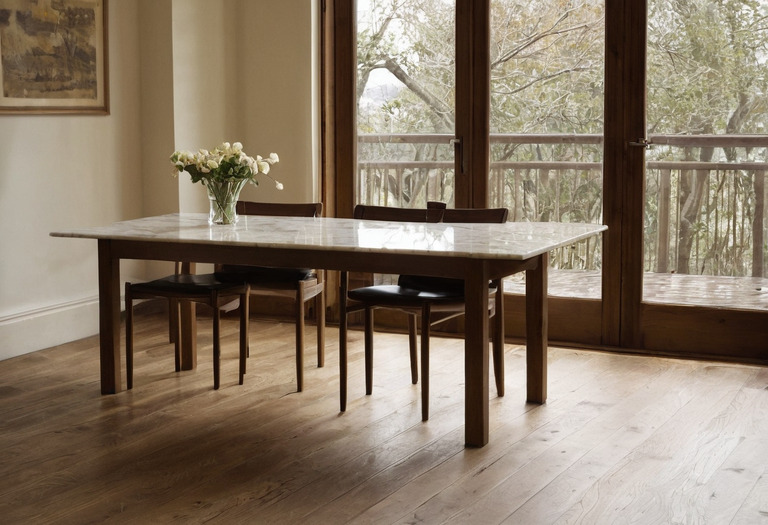
Marble develops chemical marks that sealing cannot prevent, while wood moves, dents and changes color. Both materials can last for decades, but only if the household accepts the right kind of wear.
Marble and wood are called timeless because both can remain useful after fashions change. Longevity does not mean an unchanged surface. Marble records acids, oils and abrasion; wood records sunlight, humidity, shoes and water. A successful specification matches those changes to the room and to the owner's tolerance for maintenance.
The visual choice also affects perception. Veining and grain contribute to surface texture and depth, but appearance alone says little about cleaning or repair. A sample, a care plan and an honest discussion about patina are more useful than a pristine installation photograph.
What actually happens when marble marks?
Marble etching is a chemical reaction, staining is absorbed discoloration, and scratching is physical abrasion. Each defect needs a different response. An impregnating sealer may buy time against staining, but no conventional penetrating sealer prevents acid etching. A polished surface simply makes the resulting loss of gloss easier to see.
Lemon juice, vinegar, wine and some bathroom cleaners react with calcium carbonate in marble. The reaction leaves a pale or dull patch that can feel smooth or slightly rough. Dark oil, coffee, cosmetics and rust can enter pores and create stains without producing the same surface texture.
A poultice may draw out an absorbed stain. A poultice cannot restore gloss removed by acid. Diamond honing or polishing removes a small amount of stone to blend an etch, so repeated local repairs can eventually create a shallow depression or a visibly different reflection.
A sealer changes the time available for wiping up a spill. A sealer does not make marble chemically resistant.
A honed finish generally makes etching less conspicuous because the surrounding surface is already matte. A polished finish reflects windows and fittings sharply, so any dull area interrupts the reflection. The same principle explains why daylight direction and window treatments can reveal surface changes that remain quiet under diffuse light.
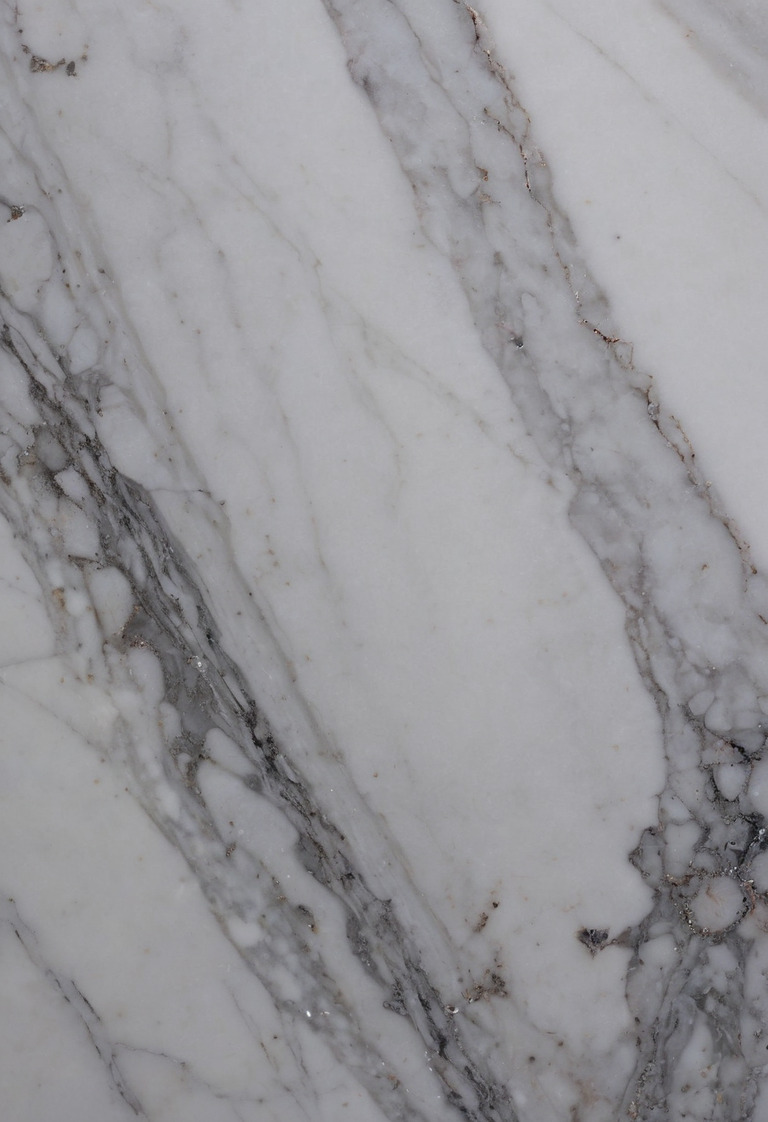
Stone suppliers use commercial names that do not always correspond neatly to one geological type or one quarry. The design team should test the actual slab batch rather than relying on the name. A useful review sample measures at least 300 by 300 mm for the selected slab and carries the proposed finish and sealer.
How does wood movement differ from ordinary wear?
Wood movement follows changes in moisture content, with most dimensional change occurring across the grain rather than along it. Seasonal gaps and slight cupping are movement; dents, scratches and worn finish are use. Engineered construction reduces movement compared with many solid boards, but engineered wood does not become dimensionally inert.
Room humidity, subfloor moisture, board width, species, cut and installation method all affect movement. A fixed acclimation period cannot replace moisture readings because delivery conditions and building conditions vary. The flooring installer should record the subfloor, room and timber readings before installation, then follow the flooring manufacturer's permitted range.
Wide solid boards magnify cross-grain movement. Engineered boards use a real-wood surface bonded to a more stable layered core, making engineered construction useful over compatible underfloor heating. The heating designer must still respect the flooring supplier's maximum surface temperature and commissioning sequence.
Wood also changes color. Ultraviolet light and visible light can darken, pale or warm a species, while rugs and furniture create protected areas. A coordinated plan for daylight and fading should consider the floor, upholstery and artwork rather than treating each finish separately.
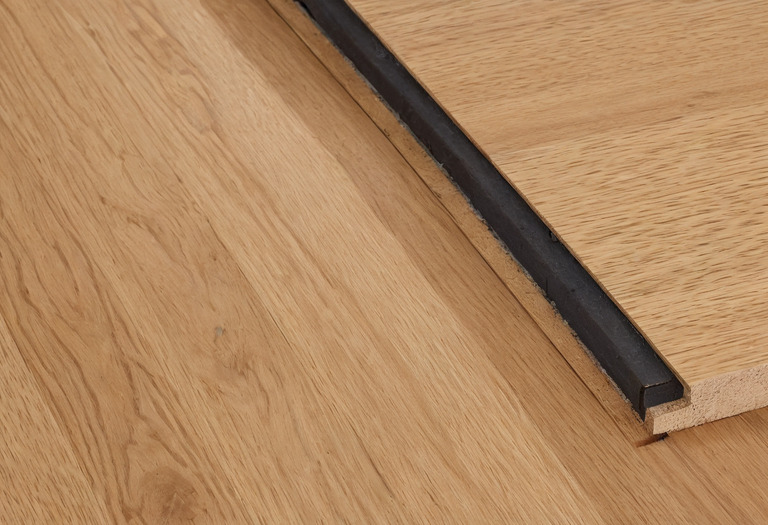
Oil and hardwax-oil finishes allow localized maintenance in many systems, although repaired areas can remain visible until use and cleaning soften the contrast. Lacquered or polyurethane-coated floors resist routine spills at the film surface, but a deep scratch through the coating is harder to patch invisibly. Product-specific instructions govern every recoating system.
Where does each material become a chore?
Marble becomes demanding where acidic spills are frequent or immaculate gloss is expected. Wood becomes demanding where standing water, wet shoes or unstable indoor humidity are normal. Neither material is automatically unsuitable for a kitchen, bathroom or entrance, but placement must reflect the likely failure mode and the household's response to visible wear.
| Location | Marble | Wood | Main design response |
|---|---|---|---|
| Kitchen worktop | Acceptable with expected etching and prompt spill care | Suitable for selected worktop zones, but vulnerable around sinks | Use trays, drained sink details and replaceable worktop sections where practical |
| Bathroom floor | Suitable with an appropriate slip-conscious finish and compatible cleaning products | Higher risk near showers and baths | Resolve waterproofing, falls, thresholds and ventilation before choosing the finish |
| Entrance | Grit can scratch polish and wear traffic lanes | Water and grit abrade coatings | Provide an effective mat zone and easy access for cleaning |
| Living room | Low chemical exposure, but tables need protection | Comfortable underfoot and usually repairable | Control direct sun and move rugs periodically during early color change |
| Outdoor threshold | Only stone confirmed for the climate and exposure | Interior flooring needs separation from rain | Coordinate drainage, exterior levels and the door sill |
The detailed clearances and waterproofing logic in kitchen and bathroom layouts should be resolved before selecting either finish. Entrance mat depth and storage also matter, as described in the guide to surfaces that survive an entrance. Exposed thresholds require the drainage approach covered under outdoor room materials.
Marble around a basin can tolerate water, but toothpaste, cosmetics and limescale removers may etch the surface. Timber beside a freestanding bath may survive careful use, while the same floor can fail quickly under a concealed plumbing leak. Household behavior matters as much as the room label.
What maintenance intervals and costs are realistic?
Maintenance should follow condition rather than a calendar alone. Marble needs neutral cleaning, periodic absorption checks and specialist correction only when damage warrants the disruption. Wood needs controlled cleaning plus finish renewal before bare fibers become exposed. The indicative 2026 United Kingdom costs below assume accessible residential areas with no major substrate repair.
| Work | Condition or planning interval | Indicative 2026 cost |
|---|---|---|
| Marble sealer check | Check 12 months after installation, then adjust the interval according to absorption and product guidance | Owner check has no contractor cost |
| Marble resealing | Apply only after cleaning and a successful test on the installed stone | £3 to £8 per m² for sealer materials, or £12 to £25 per m² for professional work across a 20 to 50 m² area |
| Marble honing or repolishing | Commission when etching or traffic wear justifies treating a complete visual area | £40 to £90 per m², with small-callout charges often dominating isolated repairs |
| Oiled timber maintenance coat | An occupied living room may need attention after 12 to 24 months; quiet rooms may last longer | £6 to £15 per m² for owner-applied materials, or £18 to £35 per m² for professional cleaning and recoating |
| Full timber sanding and finishing | A domestic floor may reach this stage after 7 to 15 years, but coating wear and remaining timber govern the decision | £30 to £55 per m² for a clear finish on an unobstructed floor |
The stated ranges are budgeting allowances rather than quotations. London access, furniture moving, edge repairs, stain removal, pattern floors and minimum visits can raise the price. A contractor should inspect the actual stone or timber before confirming scope.
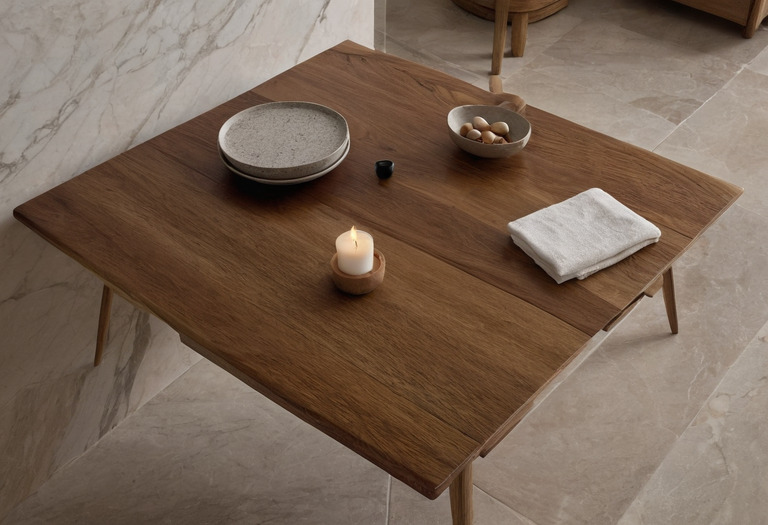
Aggressive daily cleaning shortens finish life. Marble needs a pH-neutral cleaner confirmed as suitable for calcareous stone. Wood needs minimal water and the cleaner specified for its coating. Steam cleaning can damage wood joints or finishes and should not be assumed safe without written manufacturer approval.
How should a homeowner choose between marble and wood?
The choice should begin with the acceptable failure, not the preferred photograph. Marble suits owners who can accept etching, arrange specialist polishing and enjoy mineral variation. Wood suits owners who can manage moisture, tolerate dents and renew a finish. A household demanding permanent visual perfection may be happier with another material.
Use the following decision sequence:
- Name the likely contaminant, such as lemon juice on a kitchen island or wet grit at an entrance.
- Decide whether the household accepts the resulting etch, stain, gap, dent or color shift.
- Obtain a representative finished sample and expose the sample to realistic light and cleaning.
- Ask the supplier for written cleaning, sealing, humidity and repair instructions.
- Price one normal maintenance cycle before approving the purchase.
- Keep spare timber boards and record the marble slab, finish and treatment used.
The material review should also examine sourcing, repairability and disposal. The guide to credible material certifications explains what documentation can support an environmental claim. Custom timber panels need the substrate and edge details discussed under cabinetry tolerances and drawings.
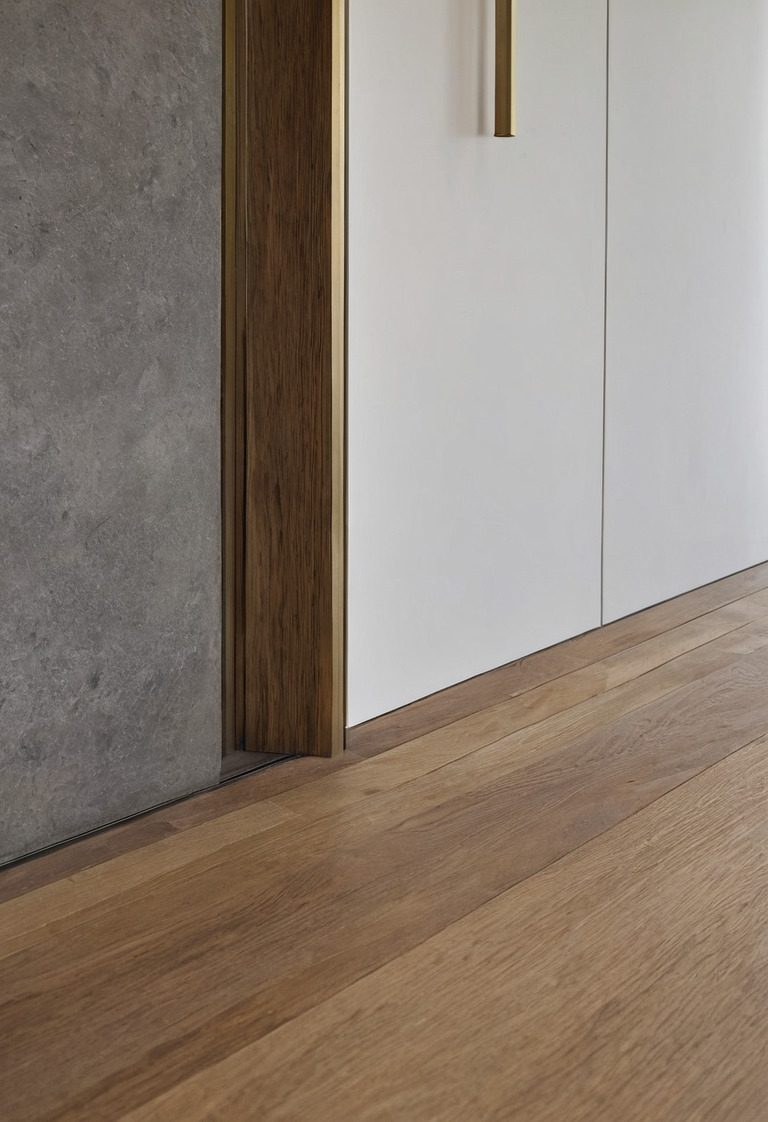
A restrained room does not eliminate maintenance. The tight junctions and broad uninterrupted surfaces associated with minimal interiors can make a warped board or isolated marble etch more visible. Good detailing allows access, repair and replacement instead of pretending that natural material will remain untouched.
Questions readers ask
- Does sealing stop marble from etching?
- No. An impregnating sealer can slow the absorption of staining liquids, but acidic substances can still react with the calcium carbonate at the marble surface.
- Is honed marble easier to maintain than polished marble?
- A honed finish usually disguises dull etch marks better than a reflective polished finish. Honed marble still stains, scratches and etches, so the finish changes visibility rather than vulnerability.
- How often does an oiled wood floor need more oil?
- Traffic and cleaning determine the interval. An occupied domestic living room may need a maintenance coat after 12 to 24 months, while quiet rooms can remain serviceable for longer.
- Can engineered wood flooring be refinished?
- Engineered wood can be refinished only when enough real-wood wear layer remains above the tongue or joint. The flooring supplier or contractor should confirm the usable wear layer before sanding.