Daylight, curtains and the details that control glare

Window treatments work when the designer treats glare, view, stack space and darkness as separate requirements. Fabric choice alone cannot resolve all four.
A successful window treatment starts with four questions: How much view should remain, where does glare occur, where will the open fabric sit, and how dark must the room become? A single fabric rarely answers every question. Layered curtains and blinds often perform better because each layer receives one clear job.
Daylight also changes color and surface appearance. The distinction between measured effects and popular claims matters, as discussed in what color actually changes in a room. Window treatments should manage that changing light without making the room permanently dim.
What does a screen's openness factor actually tell you?
Openness factor states the percentage of open area within a solar-screen weave. A screen with a 3 percent openness factor has less open area than a screen with a 10 percent factor. The number helps compare related products, but openness alone does not predict glare, heat gain, privacy or visible light transmission.
| Openness factor | Likely visual effect | Suitable starting question |
|---|---|---|
| 1 percent openness | Restricted outward view and strong direct-glare control | Does the room contain screens or work surfaces facing bright glazing? |
| 3 percent openness | Filtered view with substantial glare reduction | Does the room need a compromise between view and visual comfort? |
| 5 percent openness | Clearer view with more daylight passing through the weave | Is moderate glare acceptable during the brightest hours? |
| 10 percent openness | Open view with limited control of intense direct sun | Is view preservation more important than glare reduction? |
The table describes useful selection bands, not guaranteed performance. Two screens with the same 3 percent openness factor can behave differently because yarn color, yarn thickness and surface reflectance differ. Dark yarns often make the outward view easier to read because the eye sees less reflected light on the room-facing surface. Pale yarns often reflect more incident solar energy, subject to the complete fabric construction.
A supplier should provide optical and solar data for the exact fabric color. Relevant fields include visible light transmission, solar transmission, solar reflectance and solar absorption. Glazing type, coating, orientation and exterior shading still affect the installed result.
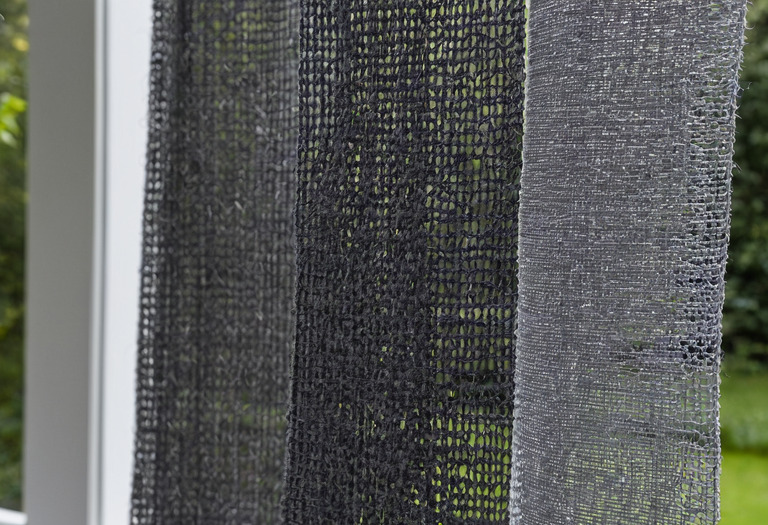
Daytime privacy also depends on relative brightness. A screen can obscure a darker interior when daylight outside is much brighter, yet reveal the same interior after sunset when electric lighting reverses the contrast. A layered lighting plan should therefore be reviewed alongside the evening privacy requirement.
How much wall space does an open curtain need?
Curtain stack is the compressed width occupied by the open curtain beside the glazing. Fabric weight, heading style, fullness, lining and carrier spacing all change that width. No reliable universal percentage covers every construction. The designer should reserve provisional wall space, then confirm the allowance with a sample or the workroom's fabrication data.
A residential track can provisionally extend 150 to 300 mm beyond each side of the window opening. The larger end of that allowance suits thicker, lined curtains or rooms where the full glass area must remain clear. A narrow pier, radiator, cabinet or switch plate can reduce the available extension.
Consider a window opening measuring 1,800 mm wide. A provisional extension of 250 mm at each side produces a 2,300 mm track. A heading specified at 2.0 times fullness requires approximately 4,600 mm of prepared curtain width across both panels before the workroom accounts for side hems, pattern matching and construction losses. The fullness calculation does not reveal the final stack width.
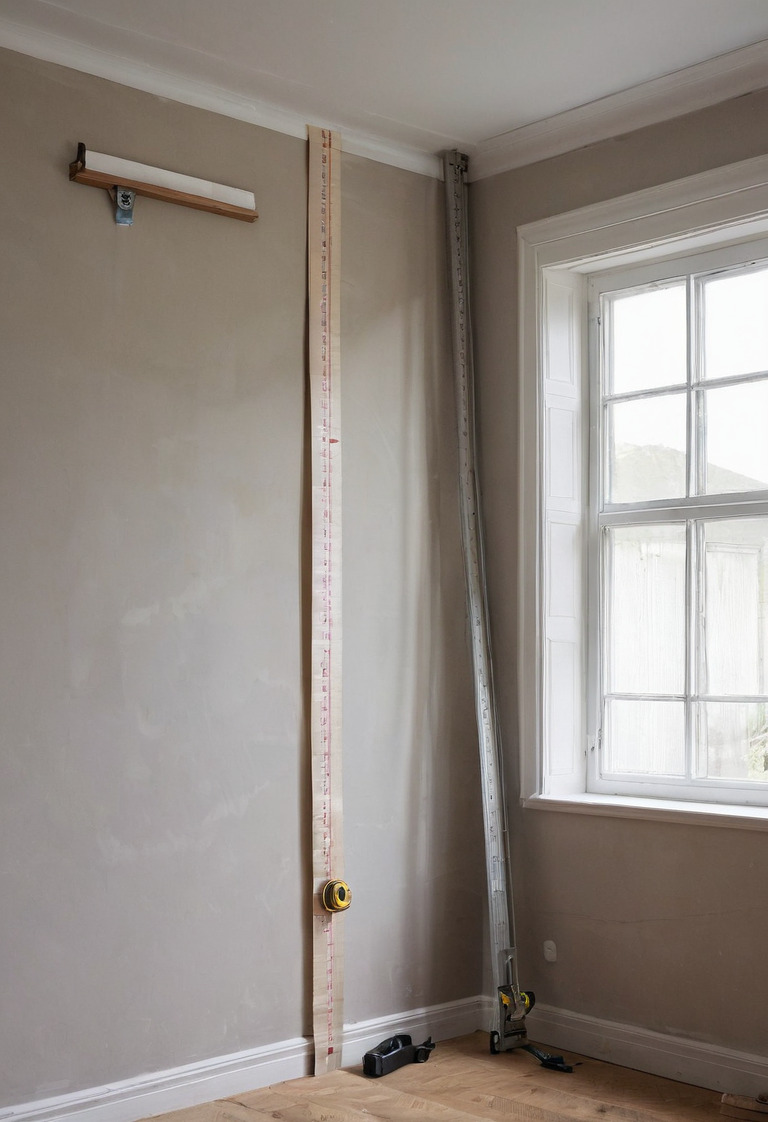
The workroom should make or reference a representative heading sample. The installer should compress that sample on the selected carriers and record the resulting stack. Wave headings require compatible carrier spacing and enough return depth, while pinch pleats create a different folded package. Dense interlining adds more bulk than an unlined sheer.
Stack space matters particularly in small-flat layouts, where every wall section has another claim on it. Nearby custom cabinetry and millwork must also allow for fabric movement, track access and the projection of handles or doors.
Mark the proposed track and compressed stack directly on the wall before electrical and joinery drawings are frozen. A curtain covering 150 mm of glass at each side can remove 300 mm of useful view even though the window opening itself remains unchanged.
What makes a blackout treatment genuinely dark?
Blackout fabric prevents light passing through the textile, but a blackout room depends on the complete assembly. Light can enter above the track, beside the panels, at the center overlap and near the floor. The designer must detail those junctions rather than relying on the word "blackout" in a fabric description.
A lined curtain normally needs overlap beyond the glazed opening. A starting detail might provide 100 to 150 mm of side overlap against an opaque wall and 75 to 100 mm of overlap where two curtain panels meet. Project conditions determine the final dimensions. Deep window trim, uneven walls and projecting handles can interrupt those overlaps.
A ceiling pocket or pelmet can block the bright line above a track. The pocket must remain large enough for carriers, hooks, fabric folds and maintenance access. The curtain hem can finish 10 to 15 mm above a level finished floor where clean operation matters, although that clearance may admit a narrow line of light. A slight break against the floor reduces the gap but gathers dust and magnifies floor-level variation.
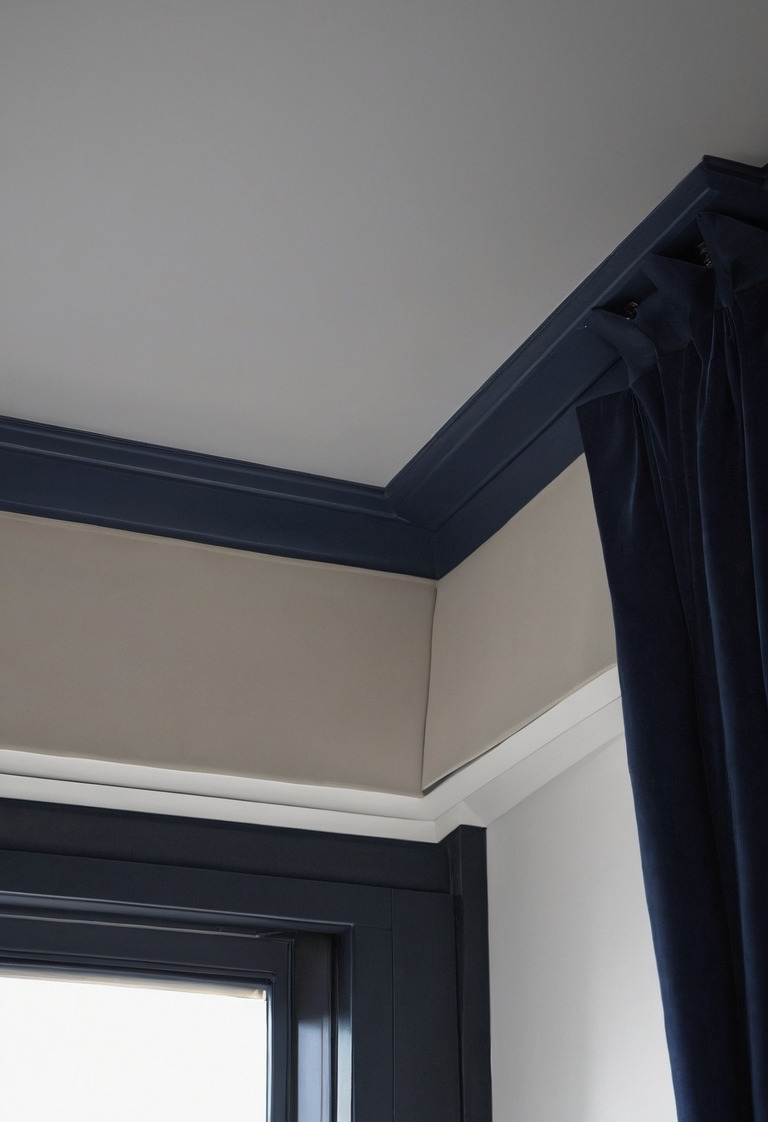
Bedrooms needing strong darkness often benefit from two separate layers: a blackout blind in side channels near the glass and curtains for softness, acoustic absorption and edge coverage. The practical sequence belongs in the wider discussion of bedroom blackout and comfort.
Motorized treatments need early coordination. Pocket dimensions, power supplies, access panels, control cables and limit settings should be resolved before ceilings close. The same timing applies to smart systems during renovation.
Blackout is a property of the complete window assembly, not a promise that one dark piece of cloth can keep.
Which curtain materials fade fastest in direct sun?
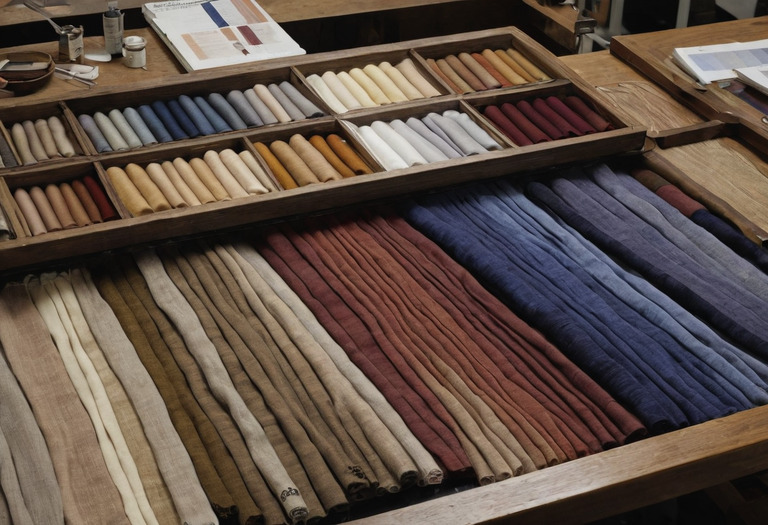
Sunlight can weaken fibers and alter dyes, while heat accelerates some forms of material degradation. Unprotected silk and many saturated natural-fiber textiles deserve particular caution at bright windows. Solution-dyed synthetic fabrics often perform better, but fiber names alone cannot establish service life. The exact dye, color, construction and exposure all matter.
Silk can lose strength as well as color under sustained sunlight. Cotton, linen, viscose and wool vary substantially according to dye chemistry, finish and shade. Deep or vivid colors may show a noticeable shift sooner than a pale neutral, although the result depends on the dye system rather than a universal color rule.
Solution-dyed acrylic and solution-dyed polyester place pigment within the fiber during manufacture instead of coloring only a finished cloth. The construction generally improves color retention, but the specification should still request a lightfastness test report for the exact product and color. A generic fiber statement is not evidence for a particular sample.
Lining protects the face fabric and can reduce exposure on room furnishings, but lining cannot stop all damaging radiation. Window films and coated glazing can reduce selected wavelengths, subject to glass compatibility and the film manufacturer's data. Exterior shading usually intercepts solar energy earlier than an interior curtain, although the architecture may not permit it.
Flooring, timber furniture and artwork also need review. The aging behavior of adjacent natural finishes is covered in how marble and wood change over time, while upholstery specifications need the separate checks in fabric durability and fiber content. Valuable works should follow the exposure limits set by a conservator, not a curtain supplier's general advice.
What should the window-treatment schedule record?
A useful schedule records performance, construction and interfaces for every opening. The schedule should not stop at a fabric code and finished drop. The contractor, workroom and electrician need enough information to coordinate tracks, pockets, controls and obstructions, while the client needs clear criteria for glare, privacy and darkness.
The schedule should include:
- Window identity, room name and measured opening size.
- Glass orientation and any exterior shading.
- Treatment type, operating direction and control method.
- Screen openness factor, exact color and supplier performance data.
- Curtain heading, fullness, lining and interlining construction.
- Track length, projection, return, center overlap and proposed stack allowance.
- Finished curtain drop and the intended floor clearance or break.
- Pocket or pelmet dimensions coordinated with the selected hardware.
- Motor position, power point, control protocol and maintenance access.
- Lightfastness evidence for the exact exposed textile color.
The final review should include physical samples held vertically at the actual window. Surface texture can scatter light and change apparent color, a relationship explored in how texture changes a room. Nearby wall sheen also affects reflected glare, so paint finish and sheen selection should not be decided under showroom lighting alone.
A midday site check and an evening privacy check reveal different failures. The midday check should assess glare, reflected brightness and view. The evening check should assess silhouettes, internal reflections and edge leakage. A window treatment that passes only one check remains an incomplete specification.
Questions readers ask
- Does a lower openness factor make a room darker?
- A lower screen openness factor usually admits less direct light through the weave, but yarn color, fabric reflectance and glazing also affect room brightness. The supplier's optical data gives a better prediction than openness alone.
- How far should a curtain track extend past a window?
- A provisional residential allowance of 150 to 300 mm beyond each side of the window opening often provides useful stack space. The installer should confirm the final extension using the selected heading, fullness, fabric thickness and carrier spacing.
- Are blackout curtains enough for a bedroom?
- Blackout fabric blocks light through the textile, but ordinary curtain edges still leak light. A darker bedroom usually needs generous perimeter overlap, a concealed track or pelmet, and sometimes a separate blind with side channels.
- Which curtain fabrics resist fading best?
- Solution-dyed synthetic textiles generally retain color better than many piece-dyed natural fibers in strong sun. No textile is fade-proof, so the specification should include a lightfastness test result for the exact color and construction.