Italian Furniture: What Separates the Makers
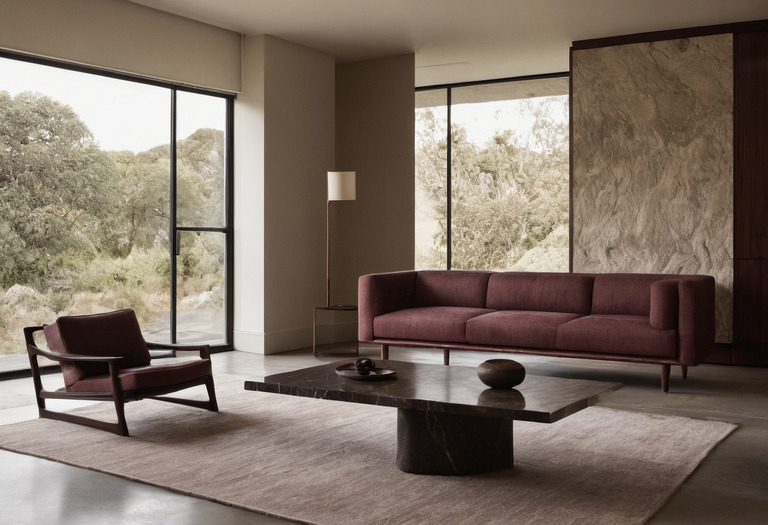
Italian origin alone does not establish quality. A useful comparison identifies who designed and made the piece, then checks construction, upholstery, dimensions, logistics, and the exact scope of each quotation.
The phrase "Italian furniture" covers several business models and a very large quality range. Country of origin can matter for craft knowledge, supply networks, and design history, but a buyer still needs a written specification. Brand recognition cannot substitute for knowing what is under the upholstery or excluded from the price.
What does an Italian furniture brand actually represent?
An Italian furniture name can identify a factory, a design editor, or a license holder. Each model can produce excellent work, but each model assigns design, manufacturing, distribution, and after-sales responsibility differently. A buyer should identify the legal seller and actual manufacturer before treating two branded products as equivalent.
- A manufacturer-led brand develops products and controls some or all production under its own name. Outsourced components are normal and do not, by themselves, indicate poor quality.
- A design editor commissions new work or produces authorized editions of earlier designs. The editor may manufacture directly or contract specialist factories.
- A licensed collection applies a fashion, automotive, or cultural name to furniture made by an authorized producer. The license establishes permission to use the name, not a universal frame or upholstery specification.
- A retailer or importer handles local sales, delivery, installation, and warranty administration. Local service can be as consequential as the factory when a replacement panel or matching hide is needed.
Readers sourcing in Dubai can review Italian collections through Solomia Home. The retailer's Versace furniture collection is an example of a fashion-led collection that should be assessed by model code, materials, manufacturer documentation, and local service rather than by name alone.
A logo identifies the commercial relationship. A specification identifies the furniture.
Authenticity checks should include the seller's full company details, written model code, finish code, country-of-origin statement, and any product certificate supplied for that specific collection. Not every legitimate maker issues a numbered certificate, so the absence of one is not universal evidence of a counterfeit.
Can the frame and suspension predict how a sofa will perform?
Frame and suspension information can expose meaningful differences, but construction labels do not predict comfort on their own. Timber species, engineered panels, joints, webbing, springs, foam, feather, and fiber must work as a system. Cushion geometry and upholstery tension can change the experience even where internal materials appear similar on paper.
| Component | Ask the seller | What the answer reveals |
|---|---|---|
| Frame | Which solid timber, plywood, or panel is used in each structural area? | Material placement is more useful than a vague "hardwood frame" claim. |
| Joints | How are load-bearing corners joined and reinforced? | Joinery and reinforcement affect resistance to repeated movement. |
| Suspension | Does the seat use elastic webbing, sinuous springs, coil units, or a combination? | Suspension type influences travel, support, repairability, and cushion behavior. |
| Cushion | What forms the core, wrap, and top layer? | Foam density alone does not state firmness or expected lifespan. |
| Covers | Which covers are removable, and can replacements be ordered? | Replaceable covers may extend service life where the frame remains sound. |
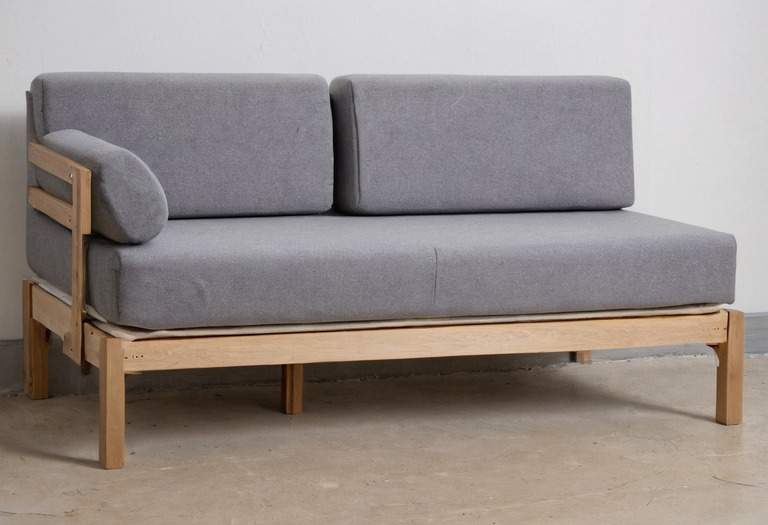
A buyer cannot verify hidden joinery in a finished showroom sofa without factory documentation or a construction sample. A long warranty may offer some reassurance, but the warranty needs readable exclusions, a named responsible company, and a remedy that remains practical in the destination country.
The fabric specification deserves the same scrutiny as the frame. The studio's guide to upholstery fiber, abrasion testing, and cleaning codes explains why a high abrasion result does not cover staining, pilling, fading, or seam performance. Buyers prioritizing traceability can also review material certifications worth requesting.
What do leather grades actually tell a buyer?
Leather terminology describes the hide layer and surface treatment, but sellers do not always use the terms consistently across markets. Full-grain, corrected-grain, aniline, semi-aniline, and pigmented describe different attributes. A useful leather specification combines hide layer, finish system, thickness, color code, and care instructions.
- Full-grain
- The original grain surface remains substantially intact. Natural variation is expected, but the term does not establish colorfastness or stain resistance.
- Corrected-grain
- The grain surface has been altered, commonly through abrasion and embossing, to create a more uniform appearance.
- Aniline
- Transparent coloration leaves the surface visually open. Limited surface protection generally makes selection and maintenance more demanding.
- Semi-aniline
- A light protective finish balances visible grain with greater day-to-day resistance than a minimally finished aniline leather.
- Pigmented
- An opaque surface coating produces more consistent color and practical protection, while reducing some natural variation.
- Split leather
- The material comes from a lower layer of the hide after separation. Split leather should not be represented as full-grain leather.
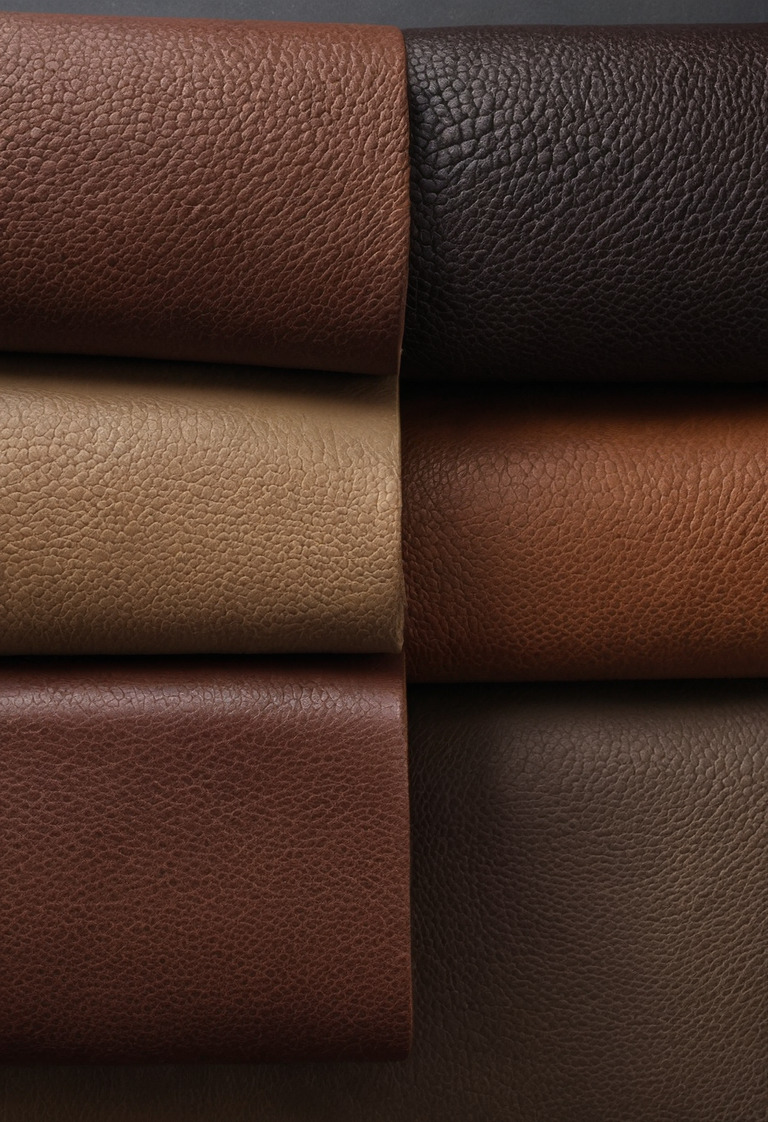
The phrase "Italian leather" may refer to tanning, finishing, furniture production, or marketing context. The phrase does not necessarily identify where the animal was raised or where every process occurred. Buyers should request a written answer rather than infer origin.
Sunlight also affects the choice. Rooms with large windows need a review of exposure, glazing, and the relationship between daylight, curtains, and fading. Texture changes reflected light as well, a point covered in the studio's note on how surfaces affect light and acoustics.
What should two furniture quotations list?
Two quotations become comparable only after the model, dimensions, finish, delivery scope, tax treatment, and commercial terms are normalized. A lower total may omit freight, installation, cushions, or local tax. A higher total may include services that the other seller expects the buyer or contractor to arrange separately.
Every quotation should state:
- Brand, collection, model code, and configuration.
- Overall dimensions and orientation for sectional pieces.
- Timber, stone, metal, lacquer, fabric, or leather finish codes.
- Upholstery category and the exact approved sample reference.
- Included cushions, accessories, electrical parts, and spare covers.
- Currency, local tax treatment, deposit, balance schedule, and quote validity.
- Estimated production period measured from written order and finish approval.
- Freight, customs responsibility, delivery, assembly, packaging removal, and access assumptions.
- Warranty provider, duration, exclusions, and process for reporting damage.
The seller should confirm the largest packaged component, not only the assembled furniture size. Doorways, elevators, landings, stair turns, and protective packaging can decide whether delivery succeeds.
The following figures are indicative 2026 retail planning bands for premium Italian-made furniture purchased in Europe. The bands exclude local tax, international freight, customs charges, and installation, and they are not valuations of any named brand.
| Furniture type | Indicative 2026 price | Main variables |
|---|---|---|
| Three-seat upholstered sofa | EUR 4,000 to EUR 15,000 | Width, fabric category, cushion construction, and designer attribution |
| Licensed fashion collection sofa | EUR 15,000 to EUR 45,000 or more | License positioning, detailing, upholstery, and limited production |
| Upholstered lounge chair | EUR 2,500 to EUR 10,000 | Mechanism, leather category, shell construction, and edition status |
| Dining table for six to eight adults | EUR 4,000 to EUR 20,000 | Top size, stone selection, veneer work, base material, and shipping weight |
A designer comparing imported quotations should issue one schedule and ask every seller to mark deviations. The same discipline applies to custom cabinetry drawings and finish schedules and to the procurement stage described in how an interior design project is run.

How should furniture be tested in a showroom?
A showroom test should reproduce normal use rather than a brief first impression. Seat depth, back angle, arm height, cushion recovery, table clearance, and chair stability deserve separate checks. Clothing, posture, and body proportions alter comfort, so every regular household user should test the shortlisted seating where practical.
For a sofa, record overall depth and usable seat depth separately. A deep shell can still have a shallow usable seat if the back cushions are thick. A seat height between 400 and 470 mm is a practical screening band for many residential sofas, not an Italian standard or a promise of comfort.
For dining furniture, many residential tables have finished tops between 720 and 760 mm above the floor. Many dining chairs place the unloaded seat between 440 and 480 mm above the floor. The resulting relationship must also account for cushion compression, apron depth, arm height, and the individual user.
A showroom test should include the following actions:
- Sit for at least 10 minutes in each shortlisted chair or sofa position.
- Check whether the front edge presses behind the knees.
- Rise without pushing against a delicate side table or loose cushion.
- Test every recliner, extension leaf, swivel, drawer, and cable opening.
- Photograph labels and write down finish codes with the seller's permission.
- View timber, leather, and stone samples under lighting similar to the home.
The room also affects perception. A disciplined ambient, task, and accent lighting plan is more reliable than a showroom spotlight, while feature-light scale and glare control matter above dining tables.
Which Italian maker is right for the room?
The right maker satisfies the room's dimensions, use, maintenance tolerance, delivery route, and budget before satisfying a preference for a famous name. Provenance can add cultural and resale interest, but provenance cannot correct a blocked passage, an unsuitable textile, or a table that arrives in one unmanageable piece.
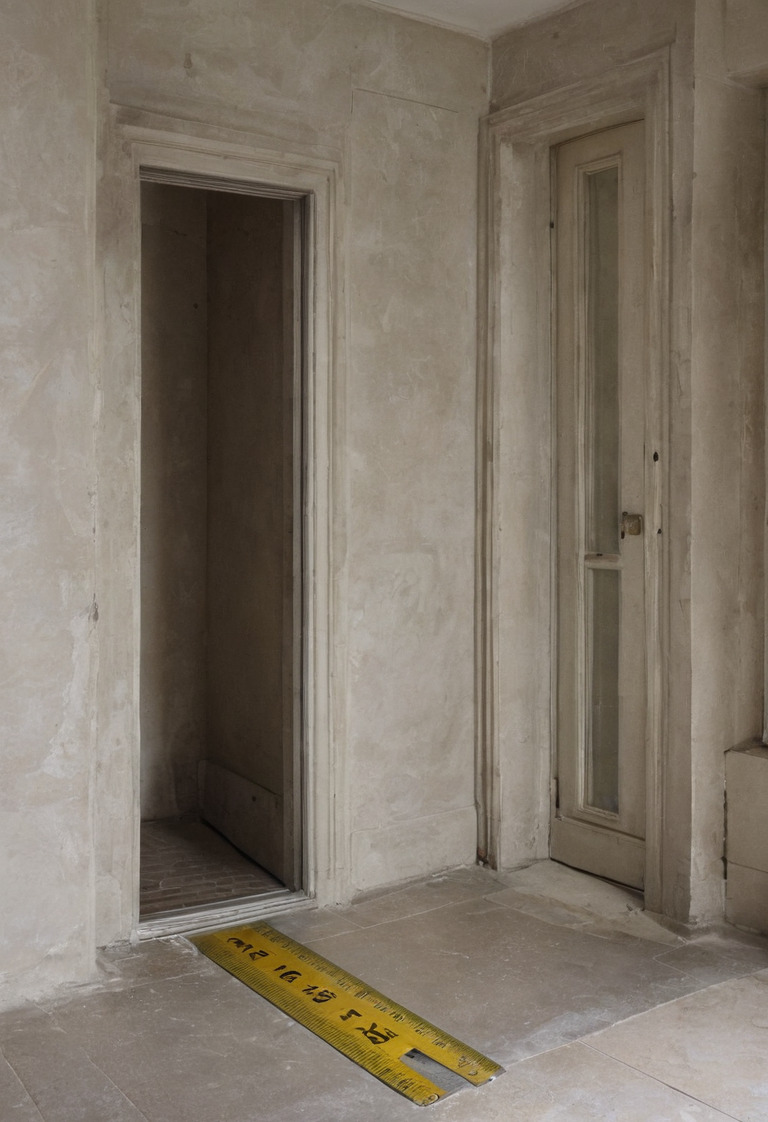
Large furniture should be drawn in plan with doors, curtains, floor outlets, and circulation. Compact homes benefit from the tests in the studio's small-flat layout guide. Decorative collections with polished metal, figured veneer, or strong geometry can also be checked against art deco proportion and material principles rather than treated as isolated statement pieces.
The final decision should rest on a normalized quotation, an approved physical finish sample, confirmed access dimensions, written care requirements, and a responsible local seller. Brand reputation becomes useful only after those practical conditions are secure.
Questions readers ask
- Does Made in Italy guarantee better furniture?
- Made in Italy is an origin statement, not a complete construction specification. Buyers should still request the frame material, suspension type, cushion build, upholstery code, manufacturer identity, and warranty terms.
- Is full-grain leather always the best choice for a sofa?
- Full-grain leather preserves the hide surface, but finish, thickness, color consistency, maintenance, and expected household use also matter. A lightly protected or pigmented leather can be more practical where spills and sunlight are concerns.
- Why can two quotations for the same Italian sofa differ so much?
- Different dimensions, upholstery categories, cushion options, taxes, freight, installation, and dealer terms can produce materially different totals. Both quotations need matching model and finish codes before the prices are comparable.
- What should a buyer measure before ordering Italian furniture?
- The buyer should record the room, final circulation clearances, doorway widths, elevator dimensions, stair turns, and the largest packaged component. Nominal furniture dimensions do not describe the complete delivery route.