Plants indoors: measure the light, then plan the care
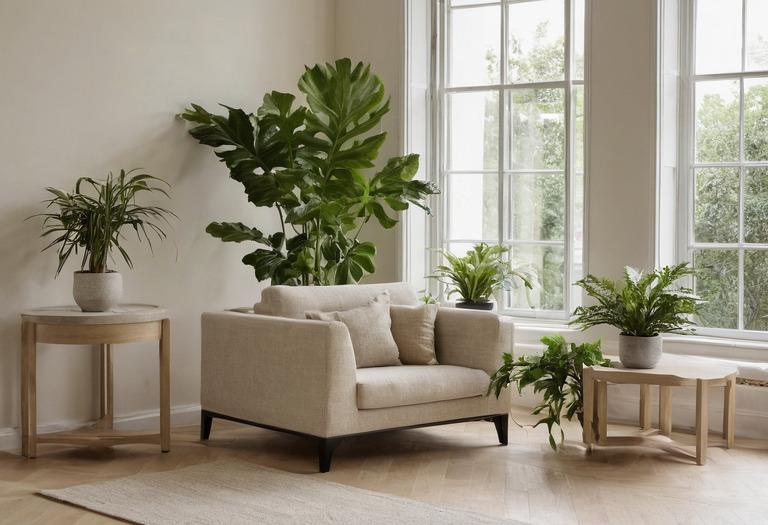
A successful indoor planting scheme starts with light readings at leaf level. Species selection, drainage, floor protection, and an assigned watering routine determine whether the arrangement still looks healthy after a year.
Indoor planting is often treated as a styling exercise: select a tall plant, add two smaller pots, and place everything near a window. The missing work concerns light at the leaves, water leaving the pot, and responsibility for maintenance.
Biophilic design is also a broader idea than placing plants indoors. Natural materials, exterior views, daylight, and changing shadow can contribute to a connection with nature. Claims that a few potted plants reliably improve health or clean the air of an occupied home remain poorly supported. A planting scheme can still be valuable for spatial structure, seasonal change, and daily enjoyment without borrowing an unproven medical argument.
How should light be measured where the plant will stand?
Plant placement should begin with illuminance measured across the leaves, not beside the window. A lux reading records light according to human visual sensitivity, while a PPFD meter counts photons within the 400-700 nanometer photosynthetically active range. A lux meter is adequate for domestic comparisons when the same instrument and method are used every time.
Hold the sensor horizontally at the intended top and middle of the foliage. Record several points because a tall plant can have bright upper leaves and a dark lower canopy. Window orientation alone is not a measurement; neighboring buildings, balconies, trees, glazing coatings, and curtains can change the result substantially.
A practical survey records leaf-level lux at three local times, such as 9:00 a.m., 12:00 p.m., and 3:00 p.m., on more than one representative day. A renovation team should repeat the survey during the darkest occupied season. The daylight behavior of curtains and glazing should be settled before the planting plan is finalized.
PPFD becomes more useful when artificial plant lighting is proposed. Daily light integral, expressed as moles of photons per square meter per day, combines intensity and duration. A constant PPFD of 50 micromoles per square meter per second over a 12-hour fixture schedule produces a daily light integral of 2.16 moles per square meter per day. Lux cannot be converted reliably to PPFD without knowing the source spectrum.
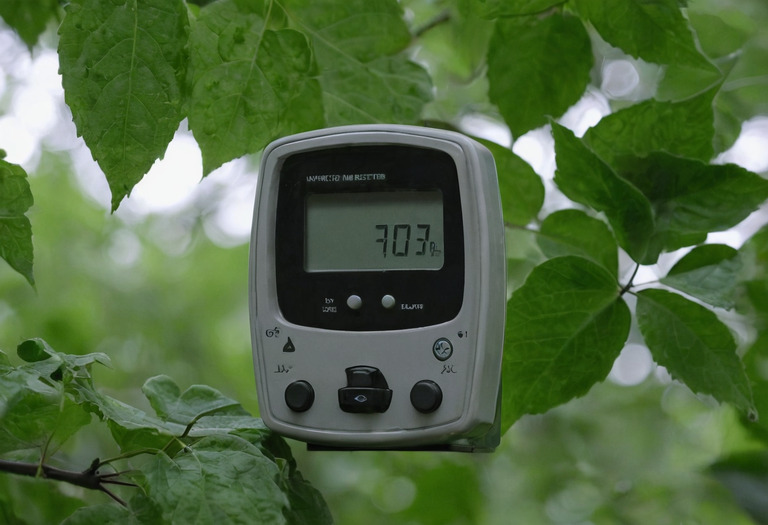
A phone sensor can identify the brighter of two shelves, but phone hardware, cases, sensor position, and app calibration introduce uncertainty. A dedicated lux meter should be used for repeatable commissioning. The same logic applies to the broader ambient, task, and accent lighting plan: measurement is more useful than assumptions based on fixture wattage.
Which plants suit each measured light band?
Species labels such as "low light" are too vague for placement drawings. The bands below are studio starting points based on repeated daytime readings at the foliage, not botanical standards or guarantees. Temperature, cultivar, acclimation, substrate, watering, and the length of the bright period can move a plant's workable range.
| Repeated daytime reading | Likely use | Possible starting species |
|---|---|---|
| Below 500 lux | Usually a relocation zone rather than a permanent growing position | No houseplant should be assumed to thrive indefinitely without added light |
| 500-1,500 lux | Low-light holding conditions with slow growth | Aspidistra elatior, Zamioculcas zamiifolia, selected Aglaonema cultivars |
| 1,500-3,000 lux | Moderate indirect light | Epipremnum aureum, Philodendron hederaceum, Dracaena cultivars |
| 3,000-8,000 lux | Bright indirect light for stronger foliage growth | Monstera deliciosa, Ficus elastica, many Schefflera cultivars |
| Above 8,000 lux | Bright positions that may include controlled direct sun | Sun-tolerant succulents, citrus, Strelitzia reginae, subject to acclimation |
The table does not mean that every specimen within a genus has identical requirements. Variegated foliage often has less chlorophyll-bearing area than a green form, while a plant moved suddenly into direct sun can suffer leaf damage despite belonging to a sun-tolerant species. Gradual acclimation matters.
Artificial plant lights need a timer, a published output measurement, and a mounting position that avoids glare. Decorative lamps selected only for warm appearance may contribute little useful plant light. The same visual-comfort checks used for feature lighting and glare apply to visible grow lights near seating and beds.
How should pots drain without damaging the floor?
Every planted container needs a credible route for excess water and a waterproof barrier beneath that route. The safest domestic arrangement usually places a drained nursery pot inside a removable cachepot. A sealed decorative vessel can conceal the system, but the maintenance team must still be able to lift, inspect, and empty the inner assembly.
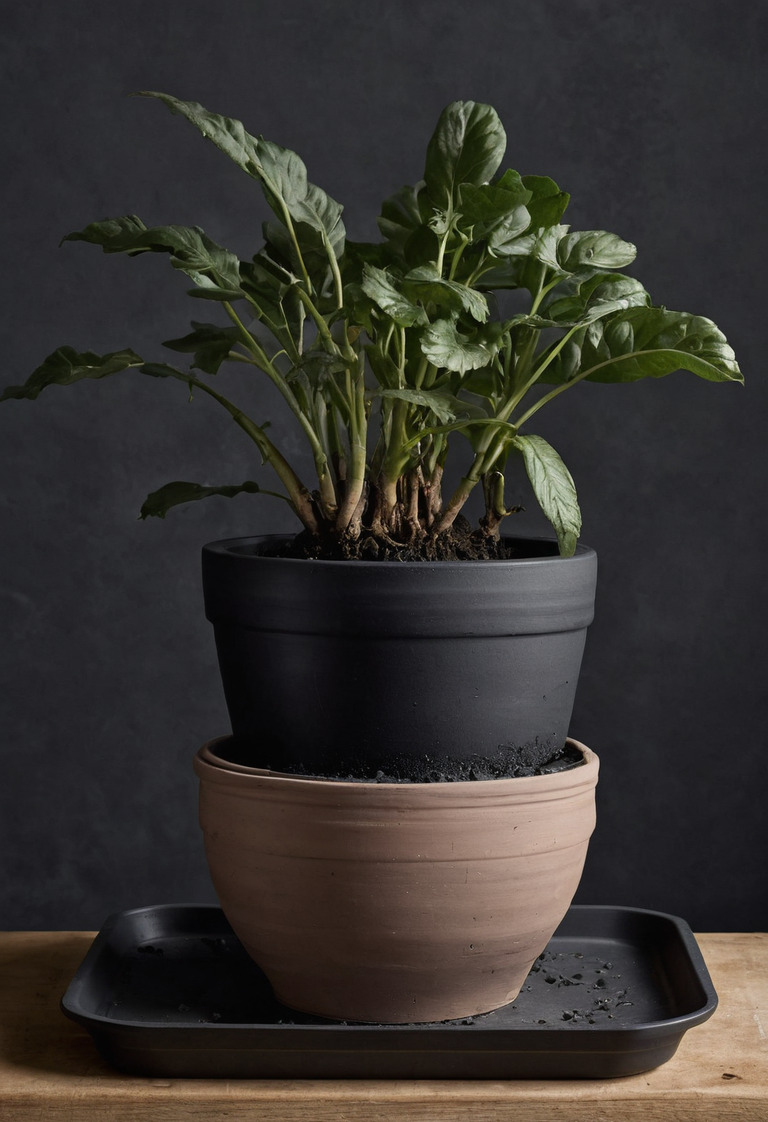
A saucer protects a floor only when the saucer is waterproof, uncracked, and large enough to catch drainage. Alvari & Pers drawings commonly show a tray extending 20-30 millimeters beyond the base of a manageable pot; that dimension is a project detail, not an industry standard. Large planters need a removable liner, inspection access, and a planned method for extracting water.
Felt pads prevent scratches but do not stop moisture. Unglazed terracotta can transmit dampness through the body of the pot. Metal cachepots can corrode or leave condensation marks. Timber, limestone, and marble need particular care because prolonged moisture can stain, darken, or disrupt a finish. The upkeep differences described in how marble and wood age should inform the protection detail.
Place the empty pot assembly on absorbent paper, add water to the inner pot, and inspect the paper after drainage. Any damp mark means the floor-protection detail is incomplete.
Built-in planters require more than a waterproof box. The joinery drawing should identify the liner, removable planting containers, drainage access, ventilation gap, and maximum loaded weight. A cabinetmaker cannot resolve horticultural drainage after fabrication. The same coordination discipline belongs in the custom cabinetry drawing package.
What maintenance keeps the scheme alive for a year?
A durable maintenance plan assigns named tasks rather than promising weekly watering. The caretaker should inspect moisture, pot weight, drainage, pests, leaf condition, and growth direction. Water demand changes with season, air-conditioning, plant size, root density, and light, so a fixed quantity on a fixed weekday will eventually be wrong.
A workable visit includes the following checks:
- Lift small nursery pots and compare their weight with the weight recorded after a full watering.
- Test moisture below the dry surface rather than judging the upper crust alone.
- Water the full root zone when the species and substrate require it, then remove collected drainage.
- Rotate only plants that tolerate rotation; some flowering plants respond poorly to repeated changes in orientation.
- Wipe broad leaves with water and a soft cloth rather than applying shine products by default.
- Inspect leaf undersides, stems, and new growth for scale insects, mealybugs, mites, or fungus gnats.
- Record plant replacements and persistent decline instead of concealing the pattern with repeated new purchases.
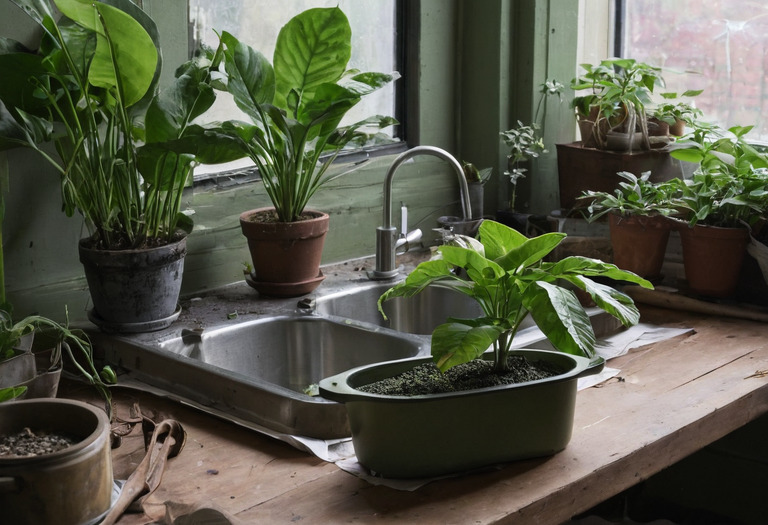
Cheap probe meters can be influenced by salts, substrate composition, and poor contact. Pot weight, a clean wooden probe, and direct inspection of the root zone often provide a clearer domestic diagnosis. Large interior planting installations may justify calibrated moisture sensors, but sensor access and replacement must be designed before the planter is closed.
The correct watering schedule is a decision process, not a recurring calendar event.
Misting gives only a brief local humidity change and can spot leaves, walls, or polished furniture. Grouping plants may alter the immediate microclimate slightly, but ordinary room humidity remains governed mainly by the building and its mechanical systems. Material choices around the planting should follow the same practical thinking used for texture, reflected light, and maintenance.
What makes indoor planting belong in the room rather than obstruct it?
A good planting layout preserves circulation, daylight, cleaning access, and visual balance before filling empty corners. Mature plant dimensions matter more than nursery dimensions. The composition should leave space for growth and removal, while pot materials should relate to nearby surfaces without pretending that every green object provides measurable environmental benefit.
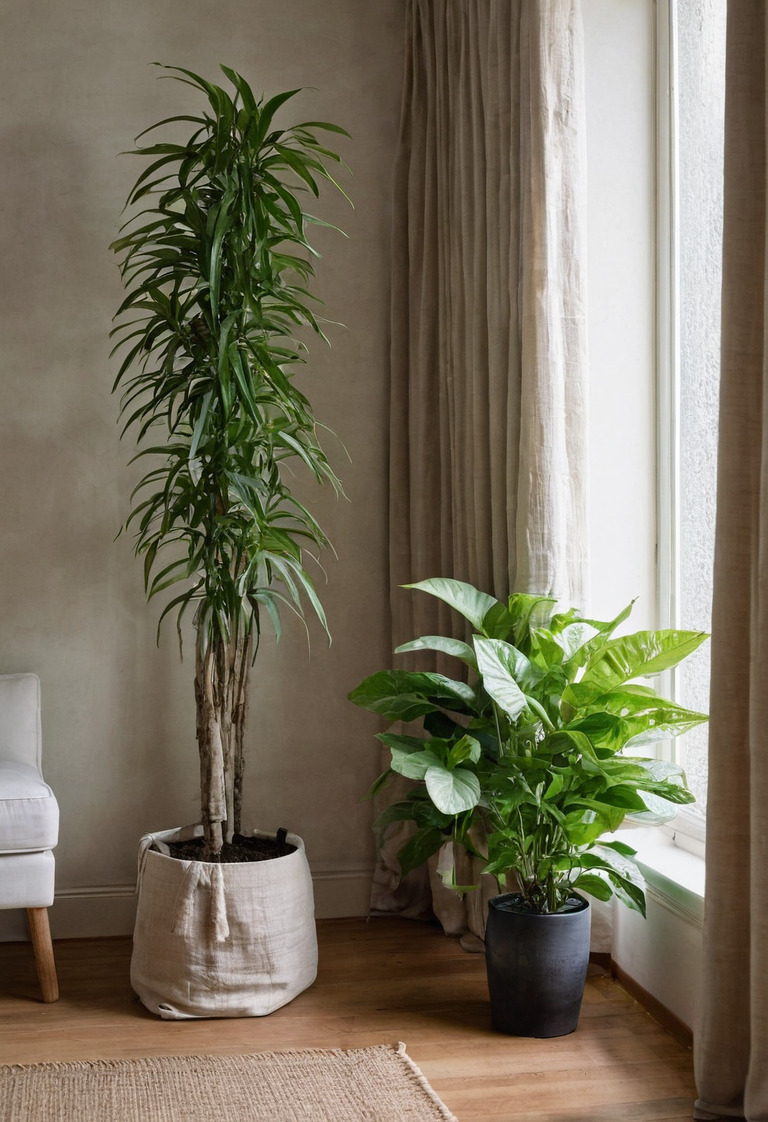
A broad leaf projecting into a passage becomes damaged and annoying. A heavy planter placed in front of a window can prevent curtain operation. A cluster beside a sofa can block a socket or floor outlet. Compact homes need especially strict editing, following the circulation principles used in small-flat layouts and the restraint described in minimalism that remains comfortable.
The final schedule should record the botanical name, pot size, measured light band, drainage method, floor protector, mature spread, maintenance owner, and review date. A review after one growing season should assess new growth, leaf spacing, color, pest history, and water use. A plant that merely survives in a dark corner has not validated the original decision.
Questions readers ask
- Can a phone app measure enough light for indoor plants?
- A calibrated lux meter gives more repeatable readings, but a phone app can compare positions if the same phone, orientation, and time of day are used. Phone readings should guide placement rather than serve as laboratory measurements.
- How often should indoor plants be watered?
- Watering frequency should follow substrate moisture, pot weight, species, and season rather than a weekly calendar. Each maintenance visit should include a moisture check before water is added.
- Can a decorative pot have no drainage hole?
- A sealed decorative pot can work as a cachepot if the plant remains in a drained nursery pot and excess water can be removed. Planting directly into a sealed vessel creates a high risk of saturated roots.
- Do indoor plants clean the air in a home?
- Laboratory chamber studies demonstrate pollutant uptake by some plants, but those tests do not establish a meaningful air-cleaning rate in an occupied home. Ventilation and source control remain the primary indoor-air measures.